
Understanding ACC

Learn about this type of cancer, how it is diagnosed, and its treatment options

What Is ACC?

Adrenocortical carcinoma (ACC) is a rare cancer that forms in the outer layer of your adrenal glands, called the adrenal cortex. These glands sit on top of your kidneys and are part of your endocrine system. This means they make and release hormones. These hormones, called steroids, control many vital functions in your body.1,2

Two of the main hormones from the adrenal cortex are cortisol (also known as a glucocorticoid) and aldosterone (also known as a mineralocorticoid). These steroids help the body to maintain blood pressure, control metabolism (how your body uses food for energy), and respond to stress and illness.2

Adrenal cancer occurs when cells in the adrenal cortex mutate and grow out of control. Cancer cells can be present and form tumors in adrenal glands only (localized) or can spread (metastasize) to other parts of the body.1,3
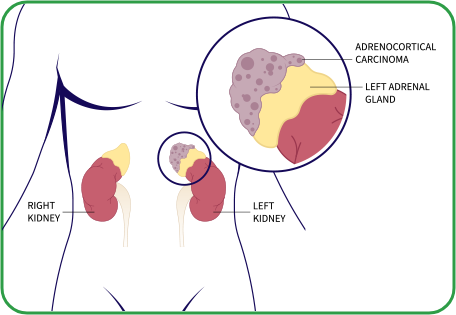
For illustration purposes only. Does not represent actual size of organs within the body.

Key Facts About ACC

  • ACC is very rare, even though it is the most common type of adrenal cancer. Each year, about 1 in 1 million people are diagnosed with ACC.1
  • ACC can occur at any age. But it is most common in adults and women between their 40s and 50s and sometimes children can develop it.1
  • The prognosis, or likely outcome, for ACC varies based on a few key factors4:
icon
The stage of cancer (size of tumor and whether it has spread beyond the adrenal gland and its tissue)
icon
Whether the tumor can be completely removed in surgery
icon
Whether the cancer has been treated in the past
icon
The patient’s age and general health
icon
Some gene mutations may put you at risk for certain cancers1

What Is the Stage of My Tumor?4

STAGE I:
The tumor is 5 cm (about 2 inches) or smaller and has not spread outside your adrenal gland. For context, 5 cm is about the size of a lime.
STAGE II:
The tumor is larger than 5 cm but has not spread outside your adrenal gland.
STAGE III:
The tumor has spread to nearby lymph nodes.
STAGE IV:
The tumor has spread to lymph nodes, other nearby organs, or more distant areas of the body

Tumor sizes are often measured in centimeters (cm).

Signs and Symptoms of ACC2

Adrenal cancers are often found after a person seeks treatment for the symptoms caused by the cancer. Some tumors are found when a doctor orders imaging tests for another condition.

There are 2 types of ACC tumors that can lead to signs and symptoms4:

  • functioning tumor that produces too many hormones
  • nonfunctioning tumor, which does not produce hormones, but may become so large it presses on other organs

About 6 in 10 patients (60%) will have a functioning tumor that produces high levels of hormones with symptoms that can include2

  • Weight gain and fluid retention
  • Excess facial and body hair growth in women
  • Excess breast tissue in men
  • Early puberty in children
  • Easy bruising
  • Muscle weakness
  • Diabetes
  • High blood pressure
  • Osteoporosis
  • Mood changes
  • Cushing’s syndrome

A nonfunctioning ACC tumor may not cause signs or symptoms in the early stage. The most common symptoms are1:

  • Pain in the back or side (called the flank)
  • A feeling of being full with no appetite because of pressure on the stomach and other organs around the adrenal gland

Many people do not receive a diagnosis of ACC until the cancer has spread beyond the adrenal gland. It is important to discuss any signs or symptoms with your doctor right away.

What Is Cushing’s Syndrome?4

It is common for patients with excess hormones (functioning ACC) to also have Cushing’s syndrome.
This is caused by a buildup of cortisol over time.

Possible symptoms include:
  • Rapid weight gain in the face (sometimes called “moon face”) or back of the neck area (sometimes called “buffalo hump”)
  • A red, round face
  • Wounds that heal poorly
  • High blood pressure (hypertension)
  • Increased hair growth on the face, neck, chest, or balding
  • Depression
  • High blood sugar (diabetes)
  • Purple stretch marks over the stomach
  • Easy bruising
  • Weak bones
  • Fatigue
  • Blurry vision and dizziness
  • Weak muscles
  • Libido changes (sex drive)

Treatment for Cushing’s Syndrome related to ACC includes surgical removal of the tumor, when possible, and may also include administration of systemic therapies that work to reduce cortisol levels in the body (e.g., steroidogenesis inhibitors).

Diagnosis1

If your healthcare professional (HCP) suspects you might have ACC, your HCP will assess your medical history and order additional tests, such as:


Blood and urine tests to check whether your adrenal gland is making excess hormones. This can be important even if you do not have symptoms because the effects of hormones can be subtle.
Imaging tests to take pictures of the inside of your body. These studies may include a CT (computed tomography) scan, MRI (magnetic resonance imaging), or other scans.

Treatment for ACC1

Treatment will be based on the stage of the tumor, and whether the tumor is resectable (can be removed by surgery) or unresectable (cannot be removed by surgery).

Surgery is the main treatment for most adrenal tumors. If the tumor is localized (has not spread outside the adrenal gland), a resection is usually possible. If the tumor is metastatic (has spread to other organs), systemic treatment (traveling through the entire body) may be recommended.

If you have unresectable or metastatic disease, you may be treated with one or more of the following:

  • Observation, in some cases
  • Surgery to remove cancer that has spread to nearby lymph nodes or other tissues
  • Radiation
  • Lysodren®
  • Chemotherapy in combination with Lysodren®
  • Enrollment in a clinical trial of chemotherapy, immunotherapy, or targeted therapy

Your Healthcare Team1

ACC care can be complex. The patient journey can involve not only a whole host of emotions, but also a whole range of tests, treatments, and HCPs. Treatment decisions should involve a multidisciplinary team (MDT) of experts.

Your treatment team may include
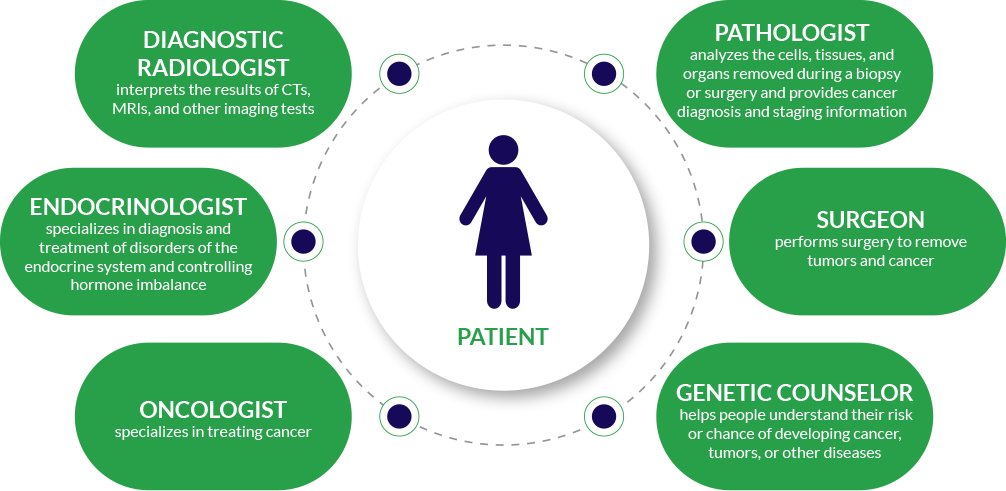
Each patient’s MDT is unique, and the above HCPs are only an example of the professionals that may be on your care team. There may be others, such as nurses, pharmacists, and psychologists who may provide care as part of your treatment plan.

Download
Downloadable Patient Guidebook:
Use this resource to help keep track of your treatment and stay connected with your healthcare team.
Download now

  1. Adrenal Tumors. NCCN Guidelines for Patients. NCCN. 2022. Accessed April 12, 2024. https://www.nccn.org/patients/guidelines/content/PDF/adrenal-patient.pdf
  2. Else T, Hammer GD. A patient’s guide to adrenocortical cancer. Rogel Cancer Center. 2019. Accessed May 23, 2024. https://www.rogelcancercenter.org/adrenal-cancer/resources
  3. Hamrahian A, Morris-Wiseman L. Adrenocortical carcinoma. John Hopkins Medicine. Accessed April 23, 2024. https://hopkinsmedicine.org/health/conditions-and-diseases/adrenocortical-carcinoma
  4. Adrenocortical carcinoma. Cleveland Clinic. Updated March 4, 2024. Accessed April 19, 2024. https://my.clevelandclinic.org/health/diseases/6152-adrenocortical-carcinoma
ESTEVE.
Passeig de la Zona Franca, 109, 4a planta, 08038 Barcelona
Tel: +34 93 446 60 00 / Fax: +34 93 347 39 44
©2025 ESTEVE.
Lysodren a registered trademark of ESTEVE
Privacy Notice | Cookie Statement
Last updated: October 2025; 0097-10/2026@ESTEVE

You are now leaving Lysodren

Lysodren provides links to web sites of other organizations in order to provide visitors with certain information. A link does not constitute an endorsement of content, viewpoint, policies, products or services of that web site. Once you link to another web site not maintained by Lysodren, you are subject to the terms and conditions of that web site, including but not limited to its privacy policy.

You will be redirected to

Click the link above to continue or CANCEL